Forestry Mulching vs. Traditional Land Clearing in Taylorsville: Which Is Right for Your Property?
The right land clearing method depends heavily on what you plan to do with your property afterward — and in Alexander County, the rolling to steep Foothills terrain adds another layer to that decision. Forestry mulching grinds vegetation in place and leaves a mulch layer on the soil, while traditional land clearing strips everything down to bare ground. Neither approach is universally better; the right fit comes down to your end goal, your acreage, and how your land sits.
Two Ways to Clear Land — What the Difference Actually Means
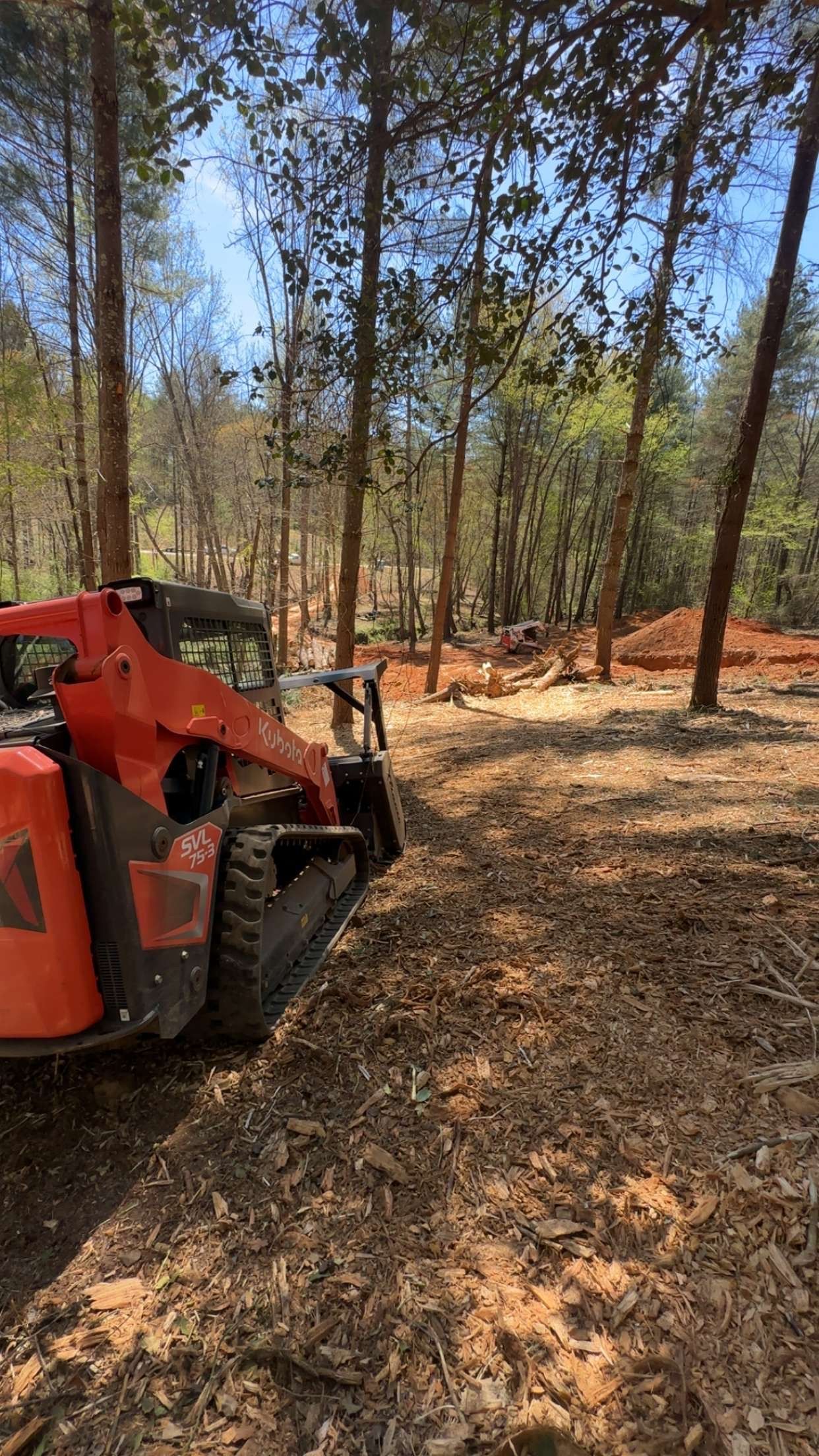
Forestry mulching uses a single tracked machine with a spinning drum head that grinds trees, brush, stumps, and vines right where they stand. The ground-up material stays on site as a mulch layer, and root systems remain largely intact underground.
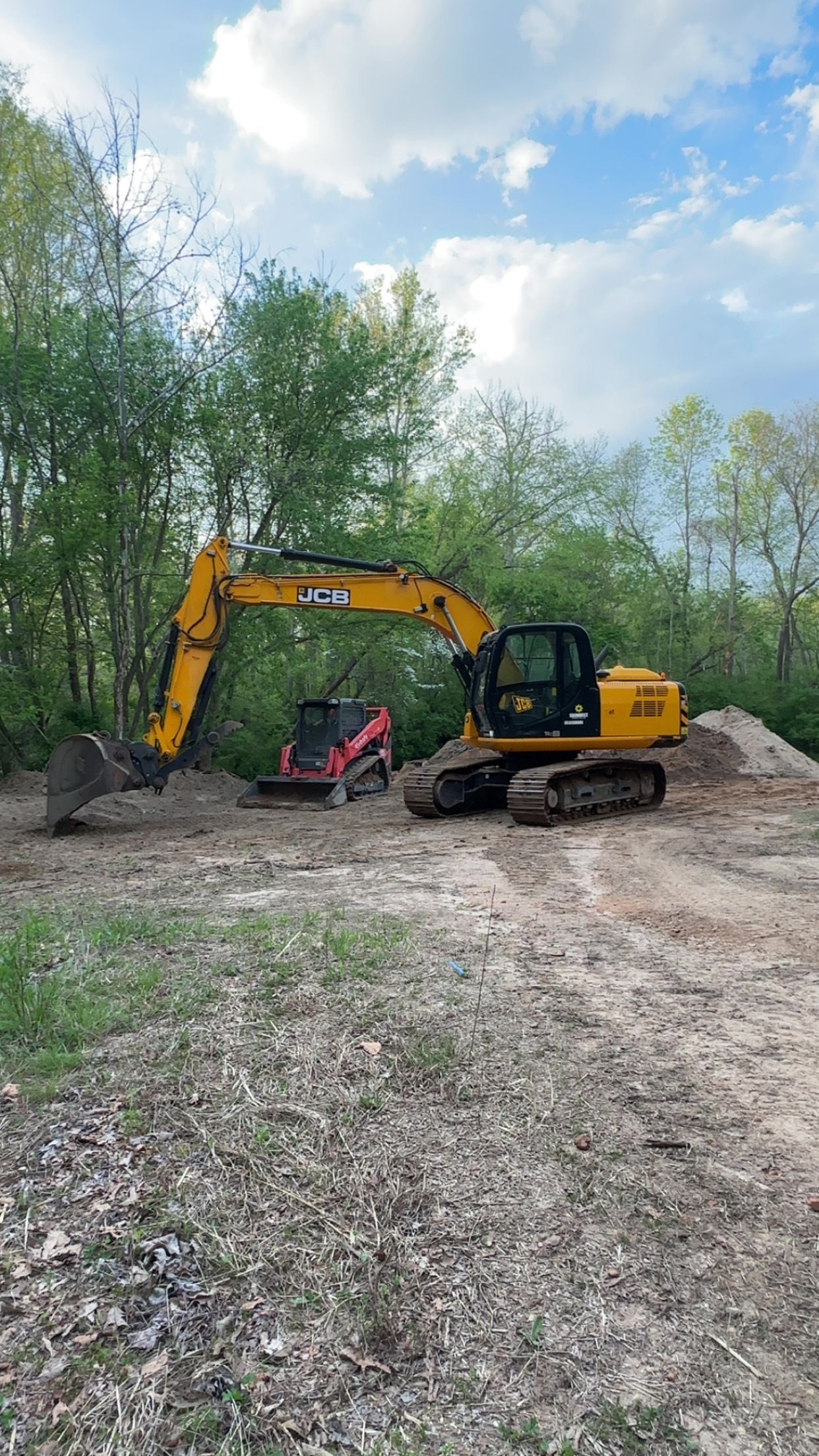
Traditional land clearing brings in a combination of bulldozers, excavators, and chainsaws to remove all vegetation and root mass. Debris is either hauled off or burned, and you end up with bare, workable soil. This is the method required when a site needs grading, a foundation, a septic system, or utility installation.
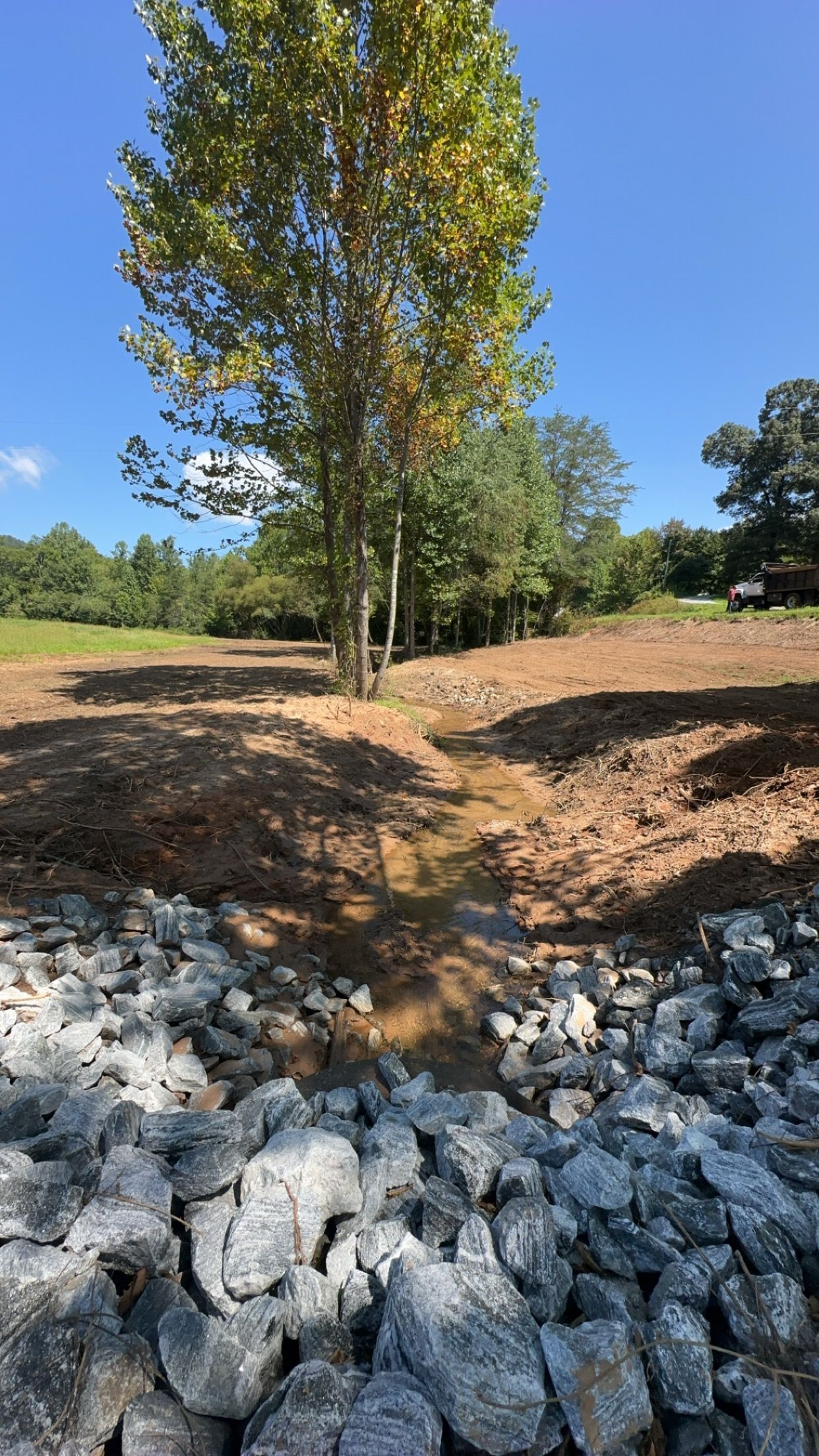
One key difference you can see immediately: after forestry mulching, your property looks cleaned up but still has soil cover. After traditional clearing, it looks like a construction site — because it is. That distinction drives almost every scenario below.
Which Factors Should Actually Drive Your Decision?
Your intended end use is the single biggest factor. If you plan to build a structure, install a septic field, or pour a foundation, you need traditional clearing — stumps and root mass must come out, and the ground must be graded. Forestry mulching cannot get a site build-ready on its own.
If your goals are access, hunting, grazing, or general cleanup, forestry mulching usually wins. It handles mixed hardwood and pine vegetation efficiently, controls erosion by keeping the soil covered, and eliminates the cost of debris hauling. You can learn more about that process on the land and lot clearing page.
Terrain matters too. Alexander County's red clay soils compact and erode quickly when topsoil is stripped and left exposed. If your property has slopes — common in the Foothills — tracked mulching equipment holds better and leaves the soil protected while you plan your next step. Heavy dozer equipment on steep, wet red clay creates erosion problems that cost time and money to fix later.
Does Forestry Mulching Work on Steep or Rocky Foothills Terrain?
Yes — tracked mulching machines are designed for uneven ground and handle slopes significantly better than wheeled equipment or standard dozers. On hillside acreage, this is often the deciding factor.
Steep lots with rocky outcroppings are common in this part of the NC Foothills. A tracked mulcher can work across those grades without the slip, soil disturbance, and compaction risk that come with heavier clearing equipment. If you're reclaiming a pasture on hilly ground, the mulch layer left behind actually helps grass re-establish by holding moisture and slowing runoff — especially important on red clay that sheds water quickly.
For overgrown acreage with dense brush, briars, and softwood scrub mixed with mature hardwoods, a mulching machine moves efficiently and handles all of it in a single pass. That same property cleared traditionally would require multiple equipment types and a separate haul-away operation for the debris and brush removal.
Real Scenarios: Which Method Fits Your Situation?
Building a home on a wooded lot: Traditional clearing is required. Stumps and root mass must come out before grading or foundation work can begin. The site will be bare soil, so plan to move quickly into construction to limit erosion exposure.
Reclaiming hunting land or creating food plots: Forestry mulching is the clear fit. You can selectively clear shooting lanes and open areas while preserving canopy structure. No debris to haul, minimal habitat disruption, and a mulch layer that suppresses early regrowth.
Pasture reclamation on hilly acreage: Forestry mulching handles the slope, protects the soil structure, and lets grass establish under the mulch cover. Traditional clearing on steep, clay-heavy ground creates a bare erosion problem before the first grass seed germinates.
Post-logging cleanup or storm damage: These situations often call for traditional clearing or a combination approach. Large slash piles and downed trees from wind or ice damage need to be removed, not mulched in place. The right method depends on the debris type and volume on your specific site.
General lot cleanup with no immediate build plans: If you own an overgrown lot and want it accessible and presentable without committing to a full build timeline, forestry mulching costs less, requires no hauling, and keeps your options open. The lot looks maintained without the exposed soil risk of a full clear.
Timing and Seasonal Conditions in Alexander County
Western Piedmont and Foothills properties see significant rainfall, especially in late winter and spring. If you clear to bare soil and aren't ready to grade or seed immediately, that exposed red clay will move. Timing traditional clearing close to your actual construction start date reduces that window.
Forestry mulching is less sensitive to seasonal timing because the mulch layer stays in place and protects the soil between clearing and whatever comes next. If your project has a flexible start date or you're clearing for non-construction purposes, mulching gives you more scheduling flexibility without the erosion risk of bare ground sitting through a rainy stretch.
Knowing which method fits your timeline as much as your terrain helps you avoid rework — stripped soil that erodes before grading starts is a problem you pay to fix twice.
Matching the clearing method to your actual end goal protects your soil, controls your costs, and gets your property ready for what comes next without unnecessary steps.
Explore your options and get a site-specific recommendation by connecting with Foothills Land Management for a land and lot clearing consultation on your Taylorsville-area property.