Frequently Asked Questions
What's the difference between forestry mulching and traditional land clearing?
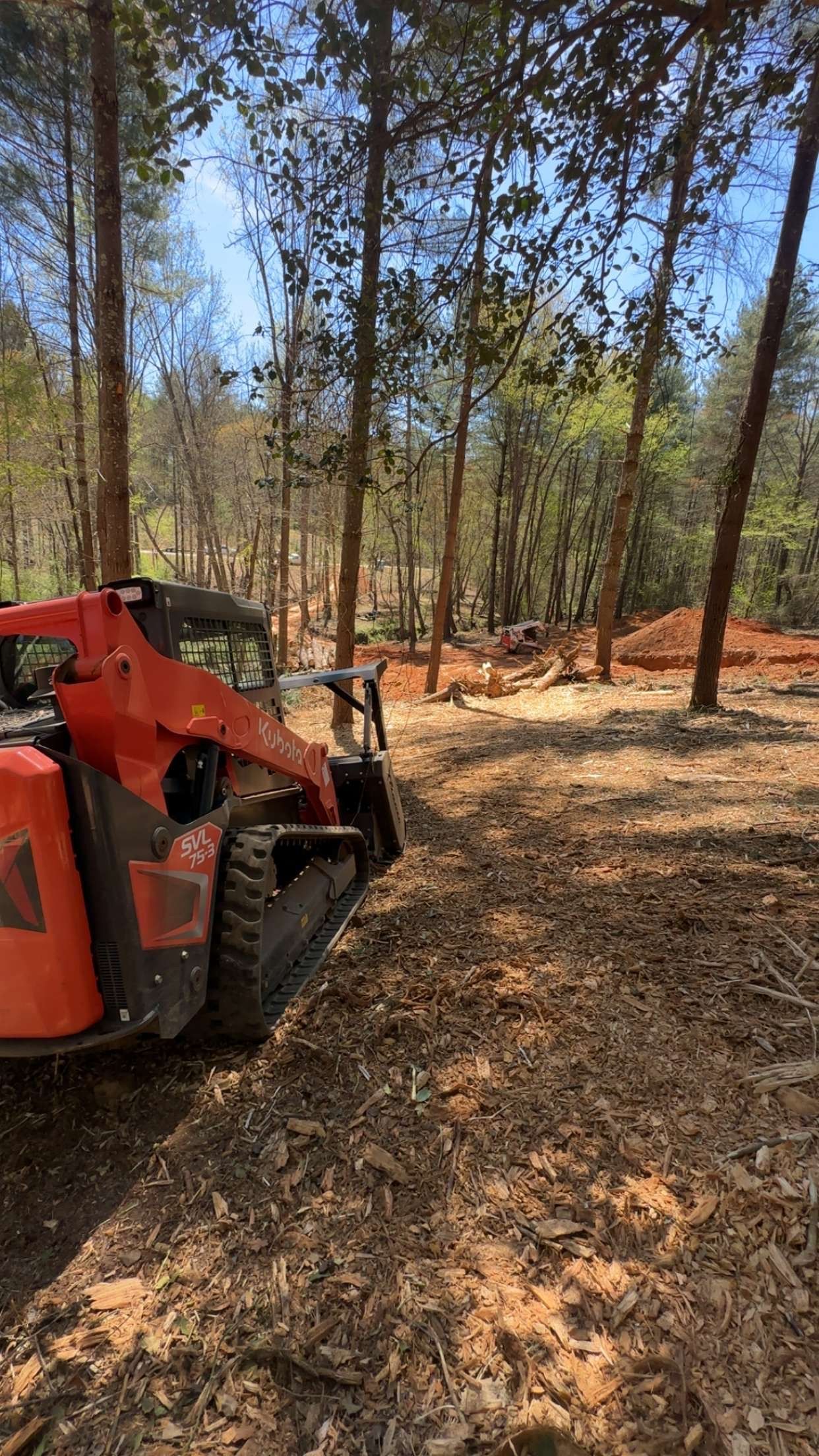
Forestry mulching grinds vegetation into a natural mulch layer that stays on the ground, minimizing soil disturbance and erosion. Traditional clearing removes material entirely, exposing bare soil. The mulch layer left by forestry mulching decomposes over time, enriching soil and suppressing regrowth of invasive plants.How does forestry mulching help with long-term property maintenance?
The mulch layer left behind suppresses weed and invasive plant regrowth while retaining soil moisture. This reduces the frequency of follow-up clearing compared to methods that strip vegetation completely. Properties stay accessible longer without constant brush management.Can you leave debris on-site after clearing or does it have to be hauled away?
Debris can be hauled away or left on-site based on your preference. Some property owners use brush piles for wildlife habitat or erosion control, while others need complete removal for construction or aesthetics. This flexibility is discussed during the estimate.What's involved in logging cleanup after timber harvesting?
Logging cleanup removes leftover debris, brush piles, and logging waste that timber companies leave behind. This prepares the property for replanting, pasture conversion, or construction. The cleanup clears access routes and eliminates fire hazards from dried slash piles.How do you provide estimates if I can't be there for a site visit?
Estimates are completed through either an on-site visit or customer-submitted photos. For photo estimates, include images showing the full clearing area, vegetation density, and any obstacles like structures or steep slopes. This allows scheduling without requiring your presence during business hours.What types of vegetation does overgrown property clearing remove?
Overgrown clearing removes thick brush, saplings, vines, invasive species, and unwanted undergrowth that's taken over neglected land. This restores access to fields, pastures, hunting land, and vacant lots. Heavy vegetation like kudzu, honeysuckle, and dense thickets are typical targets.Why is right-of-way clearing important for access lanes and easements?
Overgrown vegetation along roads, driveways, and utility corridors blocks visibility, damages vehicles, and prevents emergency access. Regular right-of-way clearing maintains safe sight lines, prevents encroachment onto traveled surfaces, and ensures utility crews can reach infrastructure without obstruction.How quickly can land clearing projects be scheduled in Taylorsville?
Many projects are scheduled within 48 hours of booking, depending on weather and equipment availability. Storm cleanup and emergency access restoration are prioritized when possible. Scheduling flexibility varies by season, with peak demand during spring and summer construction months.What's the difference between hauling gravel and full site grading services?
Hauling services deliver gravel, dirt, or sand to your property but don't include spreading, grading, or leveling the material. This works for customers with their own equipment or who only need material transport. For complete site preparation, grading contractors handle placement and finish work.What factors affect land clearing pricing for large-acreage properties?
Acreage, vegetation density, terrain slope, and debris disposal preference all impact pricing. Properties with steep grades or heavy timber cost more than flat brush clearing. Whether debris is mulched in place, piled on-site, or hauled away also changes the scope and cost.What happens during storm cleanup after fallen trees damage a property?
Storm cleanup removes fallen trees, broken limbs, and debris blocking access or threatening structures. Trees are cut into manageable sections, brush is cleared, and material is either hauled away or stacked based on your needs. Priority goes to restoring safe entry routes and removing hazards near buildings.Is forestry mulching suitable for clearing hunting land without damaging the soil?
Forestry mulching is ideal for hunting land because it clears shooting lanes and access paths while leaving soil structure intact. The mulch layer prevents erosion on trails and doesn't create the deep ruts that tracked equipment can leave. Wildlife still uses the property during and after clearing.Does the size of my property and the terrain affect my land clearing estimate?
Yes — both significantly impact your project. Acreage determines the volume of work, while terrain type (flat, sloped, or heavily wooded) affects equipment needs and time on site. We assess each property individually and offer free on-site or remote estimates so you get accurate pricing for your specific conditions in Taylorsville or the surrounding area.Who does professional land clearing and forestry mulching in Taylorsville, NC?
Foothills Land Management provides professional land clearing and forestry mulching services in Taylorsville, NC and the surrounding area. The company works across a range of property types and acreages, handling everything from overgrown lots to large wooded tracts using equipment matched to the specific terrain and scope of each job.Is forestry mulching a good option for clearing wooded acreage in the Taylorsville area?
Forestry mulching is well-suited for clearing wooded acreage in the Taylorsville area because it processes trees, brush, and undergrowth in a single pass without stripping the topsoil. The mulched material is returned to the ground as a natural ground cover, which helps control erosion on sloped or uneven terrain common in the North Carolina foothills.